Badminton Tuition in Malaysia
Badminton tuition in Malaysia puts one coach with one player and grows the game from movement outward. For a newcomer, whether a young child or an adult holding the racket for the first time, the opening weeks live inside the rally: the grip, the split-step, and the clear, drop, smash and drive that keep a shuttle alive. A competitive player takes the Persatuan Badminton Malaysia (BAM, BWF code MAS) route instead, moving from accredited club coaching to the school rounds that rise from MSSD districts through MSSN up to MSSM Kebangsaan, then to a state-squad call that points at an Akademi Badminton Malaysia (ABM) Bukit Kiara trial. Sitting above the whole climb, the BWF World Tour serves as the yardstick.
What is Badminton Tuition?
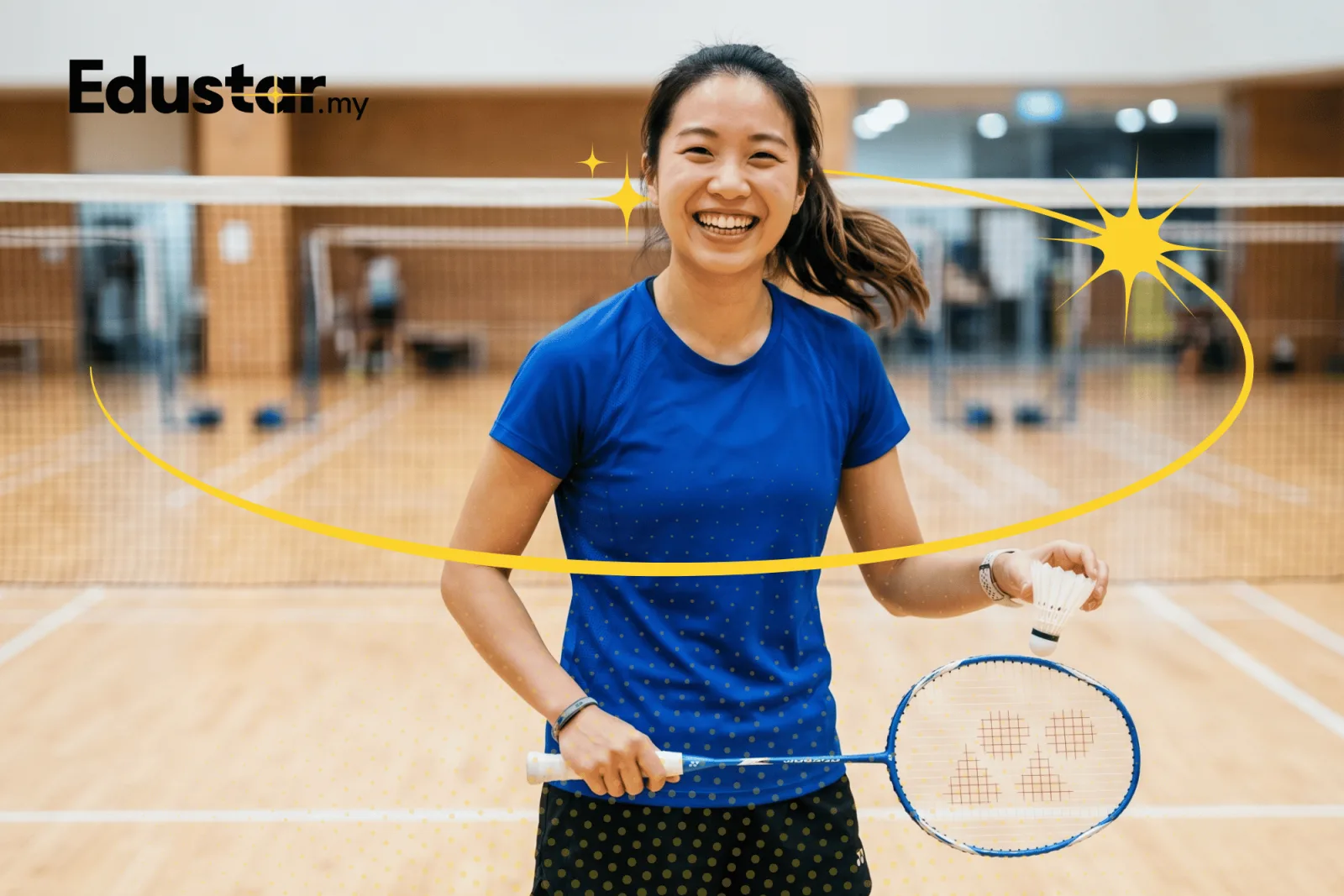
Badminton tuition in Malaysia is court-side coaching that carries on through the year and answers two very different players. The beginner, a child of roughly age 6 or an adult new to the game, works first on the rally kit shared by everyone on court: the forehand and backhand panhandle grip, six-corner movement built around the central T with a split-step and a scissor jump for the round-the-head shot, the low backhand serve used in doubles and the high serve used in singles, and the four staple strokes (clear, drop, smash, drive) that keep a shuttle in play. The competitive player takes the formal Persatuan Badminton Malaysia (BAM / Badminton Association of Malaysia, established 1934, BWF country code MAS) route: instruction from BAM-certified coaches graded on the BAM Coach Education Pathway (the Level 1 Community grade, the Level 2 Club grade and the Level 3 High Performance grade, with continuing modules stacked on top), then the MSSM (Malaysia School Sports Council) championships that open at district level (MSSD), rise to state (MSSN) and finish at MSSM Kebangsaan, followed by Sukma (Sukan Malaysia, the every-second-year inter-state games) and selection into a BAM state squad. The ceiling is a trial invitation to Akademi Badminton Malaysia (ABM) Bukit Kiara, BAM's full-time elite base inside the National Sports Complex at Bukit Jalil. Abroad, the measure is the BWF World Tour grading, climbing through Super 100, Super 300, Super 500, Super 750, Super 1000 and the World Tour Finals; the home Super 1000 is the Malaysia Open at Axiata Arena, Bukit Jalil, one of just three Super 1000 events, sitting beside the All England Open and China Open. The factual peaks are Datuk Lee Chong Wei (former BWF World No. 1 across a record 199 cumulative weeks, the longest unbroken reign in men's singles, three Olympic silvers at Beijing 2008, London 2012 and Rio 2016) and the current leaders: Lee Zii Jia in men's singles, Aaron Chia and Soh Wooi Yik in men's doubles (2022 BWF World Championship gold, 2020 Tokyo Olympic bronze), and Pearly Tan and M. Thinaah in women's doubles. Edustar sets each student beside a coach matched to the exact rung they occupy on that route.
- 01BAM (Persatuan Badminton Malaysia, founded 1934, BWF country code MAS) is the single governing federation. It grades coaches on the BAM Coach Education Pathway (Level 1 / 2 / 3) and fields the national squads from ABM Bukit Kiara
- 02MSSM school championships run across boys' and girls' singles, doubles and four-player team draws, opening at the MSSD district stage, moving to MSSN state, and finishing at MSSM Kebangsaan national, with the primary tier (Year 4-6) and secondary tier (Form 1-5) kept apart each year
- 03Akademi Badminton Malaysia (ABM) Bukit Kiara is BAM's full-time elite base. A player earns a place there by state-association nomination and a trial, generally after consistent MSSM Kebangsaan and Sukma showings
- 04BWF World Tour grading runs Super 100, Super 300, Super 500 (where the Malaysia Masters sits), Super 750 and Super 1000 (three events worldwide, the home one being the Malaysia Open at Axiata Arena), topped by the World Tour Finals. This is the international ceiling a coach aims at
- 05Datuk Lee Chong Wei is the reference mark: former World No. 1 across a record 199 cumulative weeks, the longest unbroken reign in men's singles, three Olympic silvers (2008, 2012, 2016). The line carries on through Lee Zii Jia, Aaron Chia + Soh Wooi Yik and Pearly Tan + M. Thinaah
- 06The rally kit everyone shares: the forehand panhandle grip for the forecourt and the backhand thumb-grip, six-corner footwork with the split-step and scissor jump, and the four-stroke spine of clear, drop, smash and drive
- 07Frame choice tracks the game. Head-heavy rackets (Yonex Astrox, Victor Thruster) load the attacking singles smash, while head-light or even-balance frames (Yonex Nanoflare, Li-Ning Aeronaut) favour defence and doubles speed. String tension runs 22-26 lbs for juniors and 27-30 lbs for senior competitive play
- 08Sukma (Sukan Malaysia), the biennial state-versus-state games, links MSSM Kebangsaan to the senior national picture. State-association under-15 / 17 / 19 squads feed into it, and BAM keeps a note of Sukma medallists for ABM trial invitations
- 09The KBS ministry (Kementerian Belia & Sukan) works with MSN, the National Sports Council at Bukit Jalil, to run NACMP, in full National Athletes' Career and Education Programme, which helps elite student-athletes carry SPM / STPM alongside national training
- 10Edustar gives each student one coach set to their stage on the route. Court work runs across the Klang Valley, Penang and Johor, and online sessions cover tactical breakdowns and video review wherever the player lives
Who Badminton tuition in Malaysia is for
The coach and the intensity follow where a player genuinely stands, whether that is a 6-10 year-old picking up the basics, a school-age MSSM hopeful, an adult playing for the love of it, or a junior chasing the BAM competitive route.
Kids 6-10: beginner foundations
Here a child first meets badminton as an organised sport. Already able to swing and keep a shuttle going, they move on to the grip (forehand panhandle, backhand thumb), to grooving the six-corner footwork and the split-step, then to a high overhead clear, a few forecourt net shots and a serve. Children come from private and homeschool settings, national schools (SK) and Chinese-medium and Tamil-medium schools (SJK(C), SJK(T)), and this commonly sits beside school-team practice. The point is to have fun, to grow coordination and stamina, and, for anyone keen, to be set for the district MSSD round by Year 4-5.
- Child loves the game yet meets every shot late, having never been taught the split-step habit
- A school badminton team is there, though it mixes all abilities and offers no structured curriculum or footwork drilling
- Parent bought a head-heavy adult-spec racket far too early, and now the child powers shots from the shoulder rather than the forearm
- The weekend class entertains the child but stops moving them forward: identical drills every week and no individual progression
School-age MSSM aspirants (Form 1-5)
This player is already representing the school in MSSD events, perhaps as far as the MSSN state round. A school-team coach is in place, yet the missing piece is one-to-one diagnostic work to clear a plateau. The coaching builds a full attacking arsenal (smash, drop, drive and the net kill), a disciplined doubles rotation, conditioning pitched to the MSSM tempo (best-of-three to 21 with a 30-point ceiling), and game plans cut to specific opponents. The targets in view are a medal at MSSM Kebangsaan, a place in a Sukma state squad, and a call into a BAM state-association elite junior squad.
- Marooned at MSSN quarter-final level: the easy matches are won, but the third set goes to fitter opponents
- No coherent doubles-partnership tactics, with the pair rotating the wrong way under defensive pressure
- Good smash power but an unreliable contact point, and racket-head speed bleeds away at the top of the swing
- Has heard of MSSM Kebangsaan and Sukma yet cannot yet see a clear route beyond their present MSSN level
Adult recreational players (working adults + parents)
This player is on court most weeks, anywhere from a single session to three, at a township hall or club, usually once the workday ends or on a weekend morning. Some set the racket down at SPM as juniors and have drifted back; others took the sport up in adulthood simply to stay fit. The wish might be to climb the club's social ladder or just to carry on playing without injury deep into their 40s and 50s. Coaching leans hardest on rebuilding the footwork, the split-step and the recovery to the T, the largest hole in adult recreational play, then adds grip correction, a shoulder-safe smash, cleaner doubles rotation, and conditioning matched to the player's age.
- Two sessions a week, yet the level has been stuck for a long stretch, with bad footwork habits ingrained since the teenage days
- Shoulder and wrist injury risk is climbing, because the old self-taught smash mechanics are not shoulder-safe
- The doubles partner plays on instinct, with no clear rotation logic, so match outcomes swing about
- Hits hard but rarely takes the long rallies against a patient defensive player
BAM-pathway competitive aspirants (Form 4-5 + young adult)
This is a strong MSSN or MSSM Kebangsaan junior aiming for a Sukma state squad and a BAM state-association elite junior squad, already a regular in BAM-affiliated club tournaments. Coaching digs into tactics, trapping an opponent in the four corners in singles and drilling the first three shots in doubles, then into reading opponents off BWF World Tour broadcasts and BAM domestic footage, conditioning for the senior competitive load, and the mental routines that stop a match from unravelling, the reset between games and the way you settle yourself after dropping one. For the exceptional few, it plots a route toward an ABM Bukit Kiara trial. This player knows the clock: the BAM elite track rewards years of unbroken work and never a single sprint.
- Plateaued at MSSN gold-medal level, able to hit the strokes but unable to turn technical edge into competitive consistency
- No dependable read on which 2-3 tactical shapes deserve deep prep this season
- Tournament entry is scattershot, chasing events that never show on the BAM state-association radar
- Carrying the SPM / STPM academic workload on top of daily training, so NACMP-aware coaching becomes essential
What badminton coaching covers
Three modules track the badminton climb: beginner foundations (grip, footwork, serve and the clear, for a 6-10 year-old or a first-time adult), intermediate (smash, drop, drive and net play, MSSM-track Form 1-3), and advanced (tactics, tournament prep and MSSM Kebangsaan / BAM state-squad selection, Form 4-5 and elite juniors).
Beginner foundations: grip, footwork, serve, clear (age 6-10 + first-time adult)
Set down the four things every badminton player needs before any tactic is worth teaching: the forehand and backhand grips, the six-corner movement pattern, a dependable serve, and the high overhead clear. Aimed at primary-school children (Year 1-6) and adults beginning fresh at any age.
Forehand grip (panhandle for the forecourt, V-grip for power strokes) and the backhand thumb grip; the six-corner movement pattern (front-left / front-mid / front-right / back-left / back-mid / back-right) anchored on the central T-position; a split-step on each opponent shot; the scissor jump for the round-the-head clear; serve technique, covering the high singles serve (deep, steep, into the back tramline) and the low backhand doubles serve (skimming the net, flat); the high overhead clear (a defensive deep clear to the back tramline and an attacking flat clear); basic forecourt net shots such as the tumbling net and the hairpin net; a basic mid-court drive; a first look at singles court geometry against doubles court geometry; shuttle types, feather (BWF-approved, competitive) against nylon (training, casual); racket choice for a first frame (head-light balanced, 80-85g strung, tension 22-24 lbs for juniors); a first MSSD-level school badminton entry route for school-age kids.
Intermediate: smash, drop, drive, net play (Form 1-3 MSSM track)
Put together the attacking shots and the pace control that MSSM school play calls for, the climb from district MSSD through MSSN to MSSM Kebangsaan, plus BAM-affiliated club tournaments. The coach drills the staple attacking strokes, the net-and-kill, doubles rotation, and the way a rally is built toward the kill.
Smash technique: forearm pronation, racket-head speed, a contact point well ahead of the head, full body rotation through the shot; the jump smash for elite juniors; slice drop and fast drop variations (forehand and backhand); the cross-court drop as a pace-changer; the flat drive across the mid-court (forehand and backhand); net-play depth, taking in the tight tumbling net, the cross-court net and the net kill (lift-and-kill); the attacking lift against the defensive lift in doubles; doubles rotation shapes, the front-and-back attacking formation against the side-by-side defensive formation, plus what triggers a rotation; singles coverage discipline, recovering to the T after every shot; a first look at deception (slice, hold-and-flick, racket-head delay); MSSM time control and match-format awareness (usually best-of-three to 21 with deuce and a 30-point ceiling); the re-string maintenance habit (a tension drop of about 2 lbs per month is typical); the BAM-affiliated club entry route.
Advanced: tactics, tournament prep, MSSM Kebangsaan + BAM state-squad selection (Form 4-5 + elite juniors)
Move from a state-medal contender at MSSN to a podium at MSSM Kebangsaan and selection for a BAM state squad or Sukma. The coach tunes tactical shapes to a BWF World Tour template (Lee Zii Jia's singles model, the Aaron Chia / Soh Wooi Yik men's-doubles structure, the Pearly Tan / M. Thinaah women's-doubles structure), rehearses the match situations that swing results, and steers the student along the road from MSSM Kebangsaan to Sukma to a BAM state squad and an ABM Bukit Kiara trial.
Singles tactical shapes: varying attacking length (the deep clear, drop, then smash sequence), pinning the opponent into four corners, holding recovery discipline under sustained pressure, pace-change game plans; doubles tactical shapes: the first three shots of a rally (serve, return, then third shot), attacking-formation transitions, defensive rotation under the smash, mid-court coverage discipline; opponent video analysis drawn from BWF World Tour broadcasts and BAM domestic tournament footage; physical preparation, meaning badminton-specific interval sessions, plyometric work for the jump smash and rotator-cuff prehab; a tournament-day drill covering the warm-up order, hydration, resets between sets, plus an anti-tilt mental habit once a set is lost; a senior competitive racket setup, a head-heavy frame (Yonex Astrox, Victor Thruster) for attacking singles, a balanced frame for doubles, string tension 27-30 lbs, several frames kept in rotation; awareness of MSSM Kebangsaan seeding and format; how the Sukma (Sukan Malaysia) state-squad selection works; the BAM state-association elite junior route; the ABM Bukit Kiara trial expectation, meaning what selectors weigh (stable technique, a physical baseline, match intelligence, mental durability); the NACMP context for student-athletes who carry the SPM / STPM workload with national training.
From first call to first badminton coaching session
The way into badminton coaching with Edustar, taken step by step: read the player first, sequence the footwork second, then build the tactical drilling on top.
- 1
Free needs assessment (Day 0)
Start by letting us know the player's age and current level, whether a complete beginner, a casual hitter, a school-club regular, an MSSD or MSSN competitor, or a BAM-affiliated club player. Add any MSSM ranking or club-ladder position, the racket and string in use, the goal being chased (fitness, a medal at MSSM, Sukma selection, an ABM Bukit Kiara trial), and how many weekly hours are free for training. We will say plainly what that stretch of time can and cannot deliver.
~15 min - 2
Diagnostic: footwork, stroke and match-video review
The coach either spends 30-45 minutes courtside with the player or, online, studies two or three recent match clips. The order is deliberate. Footwork leads: is there a split-step on every opponent contact, is the six-corner pattern accurate, does the player recover to the T. Then the grips, forehand and backhand. Then the smash, its contact point, forearm pronation and body rotation. Then the tactical read, court-coverage logic in singles and rotation in doubles. What we are after is the three or four faults that keep resurfacing, since those become the backbone of the whole plan.
Before lesson 1 - 3
Coach matching (BAM cert level + temperament)
Now we choose a coach whose grade fits the player's stage and goal. A BAM Level 1 (Community) coach suits first-timers and recreational adults, a Level 2 (Club) coach suits MSSD and MSSN juniors, and a Level 3 (High Performance) coach takes on MSSM Kebangsaan, Sukma and ABM-pathway players. Temperament is matched too: an attacking-singles coach for the child set on building a smash, a doubles specialist for a school doubles pairing, a conditioning-minded coach for the adult. Court sessions cover the Klang Valley, Penang and Johor, and video-review sessions run online for players anywhere in the country.
1-3 days - 4
First lesson: foundations and plan anchor
The opening lesson fixes one structural choice to guide roughly the next half-year. A beginner settles which racket profile and string tension to live with and starts the footwork-first sequence. An MSSD or MSSN junior picks the two or three tactical shapes to drill in singles and doubles. An adult begins the footwork rebuild and a shoulder-safe smash. A BAM-pathway junior maps the tournament calendar and an opponent-prep workflow. Whichever it is, lesson one sets the baseline and aims the trajectory.
Lesson 1 - 5
Weekly drilling: footwork, strokes and tactics
Each week runs an hour to ninety minutes, divided three ways. Footwork first: the split-step, six-corner pattern, T-recovery, scissor jump and lunge work. Then the strokes: the three or four priority faults from the diagnostic, worked through racket-head-speed drills, contact-point consistency and, where it applies, doubles rotation. Tactics last: building a rally at match tempo, adjusting to an opponent's pattern, and the reset habit between rallies. Away from the court the player shadows footwork for 15-30 minutes a day at home and plays one or two supervised matches.
Ongoing, weekly - 6
Tournament prep: MSSM / BAM-affiliated open cycles
Four to eight weeks before a target event, be it an MSSD, MSSN, MSSM Kebangsaan, a state open or a BAM-affiliated junior open, the work turns event-specific. That means scouting opponents on video, walking the court geometry, conditioning to the real match format (best-of-three to 21 with the 30-point ceiling), tapering the physical load ahead of the event, and briefing the day itself: the warm-up order, hydration, the reset between games and the routine that keeps the head level after a set slips away.
Final 4-8 weeks pre-event - 7
After the tournament: review and the next cycle
Within a week of the event, coach and student sit down over every match video and name what to mend across the following few months: the footwork that leaked under pressure, the stroke that fell apart when tired, the pattern an opponent kept exploiting. The multi-year map gets a refresh: MSSD this year, MSSN the next, MSSM Kebangsaan and a first state-squad shot the year after, then Sukma and an ABM trial for the exceptional. The coach stays reachable through BAM state-association selection windows and for any technical question between tournaments.
1 week post-event
Things parents ask us first
The BAM → MSSM → Sukma → ABM Bukit Kiara pathway
BAM (Badminton Association of Malaysia / Persatuan Badminton Malaysia, founded 1934, BWF country code MAS) governs the entire sport nationally, and the climb it oversees is well travelled. A player joins a BAM-affiliated club under a BAM-certified coach; while still at school, they enter the MSSM draws and try to win their way out of the district round (MSSD) into the state round (MSSN) and on to MSSM Kebangsaan. Good results open a spot in a state-association under-15 / 17 / 19 squad, then the state jersey at Sukma (Sukan Malaysia, the biennial inter-state games). Catch a BAM selector's attention there and an ABM Bukit Kiara trial follows, with full-time elite training at the National Sports Complex at Bukit Jalil. Over all of it stands the BWF World Tour, stepping up Super 100 → 300 → 500 → 750 → Super 1000; the home Super 1000, the Malaysia Open, is played at Axiata Arena, Bukit Jalil.
Footwork before strokes: the standard coaching sequence
Ask any BAM-certified coach where self-taught Malaysian players lose the most ground, the twice-or-thrice-a-week adult included, and the answer comes back the same: six-corner footwork. The wrist mechanics are often clean, yet there is no split-step off the opponent's contact, no scissor jump on the round-the-head shot, no recovery back to the T, so every reply arrives late and off-balance. That is why movement leads the syllabus: a split-step on each shuttle struck, the six-corner pattern (front-left / front-mid / front-right / back-left / back-mid / back-right) tied to the T, scissor jumps for the overhead clears, and a lunge to recover out of the net. Strokes can be tidied afterwards, while footwork wired in wrong at twelve is far harder to unpick at twenty. Reckon on a coach spending 30-40% of a junior session moving the player around the court rather than feeding shuttles to be hit.
Racket choice matters: head-heavy vs balanced vs head-light
Three frame profiles, three different games. A head-heavy frame (the Yonex Astrox and Victor Thruster lines) carries its weight behind the smash and suits an attacking singles player willing to give up a sliver of defensive reaction. A head-light or fast frame (Yonex Nanoflare, Li-Ning Aeronaut) whips the racket head through faster and suits doubles players and counter-punching singles; even-balance frames land in between. String tension is a separate decision: juniors usually string 22-26 lbs for easier power and a gentler load on the shoulder, senior competitors 27-30 lbs for tighter control, paying for it in extra shoulder strain and quicker frame-and-string wear. The usual plateau-maker is a parent grabbing a frame off the shop wall that fights the child's style. A coach should prescribe frame, string and tension as part of the plan, leaving none of it to guesswork.
MSSM is the gold route for MY school badminton, and any school can enter
School badminton follows the MSSM calendar season after season, split into a primary tier (usually Year 4-6) and a secondary tier (Form 1-5). A team fights up three rounds, the district MSSD, the state MSSN, then the national MSSM Kebangsaan, across boys' and girls' singles, doubles and the four-player team. Getting in is straightforward: any school fielding a badminton team signs up for the MSSD round, and no entry fee blocks the way. Reach the podium at MSSM Kebangsaan and a player starts turning up on the radar of SBP sports-stream intake and of the elite junior squads the state associations run as feeders into Sukma. A coach who already reads the MSSM scoring (best-of-three to 21 with deuce and a 30-point ceiling) and how pairings are seeded hands you something the raw quality of a single stroke never can.
Malaysia's badminton peak is real: Datuk Lee Chong Wei legacy + current generation
Malaysian badminton owns a genuine summit, and it pays to know it. Datuk Lee Chong Wei held BWF World No. 1 across a record 199 cumulative weeks, the longest any men's-singles player has managed, and gathered three Olympic silvers (Beijing 2008, London 2012, Rio 2016) before stepping away in 2019. The next wave carried it forward: Lee Zii Jia took the 2022 All England men's singles, Aaron Chia and Soh Wooi Yik claimed 2022 BWF World Championship gold with 2020 Tokyo Olympic bronze in men's doubles, and Pearly Tan with M. Thinaah are fixtures at the World Tour Finals in women's doubles. The honest line for a parent is this: badminton ranks among the most institutionally settled sports in the country, and the road from a school MSSD club up to the BAM national squad genuinely exists and is well travelled. It still demands the same patient, years-long commitment that olympiad maths or serious chess asks for. Most juniors who train properly land at MSSN or MSSM Kebangsaan and leave fitter and more disciplined, while the BAM senior-elite tier stays a thin band right at the top.
A Saturday group class and a 1-to-1 BAM-certified coach do different jobs
Plenty of Malaysian parents start a child at a weekend group class at the neighbourhood sports hall. Setia Alam, Bandar Sunway, Mont Kiara, Bangsar South: every Klang Valley township runs one. As a first taste it works fine, with RM 30-60 a session, ten to twenty kids of mixed ability, and shuttles fed out of a basket for basic drills. What it cannot give you is the eye that spots the same footwork fault returning week after week, the judgement to sequence the curriculum (bring the scissor jump in now, park it until later), or the blunt courtside call that 'the smash is bleeding power because you're taking the shuttle behind your head, so let's fix the timing.' That diagnostic layer is what a one-to-one BAM-certified coach supplies, and it is why many of our students hold the weekend class for match play while adding a midweek one-to-one purely for technique.
What Badminton tuition with Edustar covers
A plain account of the scope. There is no MSSM medal on offer, just structured coaching that runs the full year and lines up with the BAM, MSSM, Sukma and ABM route.
Age 6 – adult
Levels supported (beginner foundations to BAM-pathway competitive)
BAM + MSSM
Coaching frameworks aligned (BAM Coach Education + MSSM school ladder)
MSSM + Sukma
Tournament tracks (MSSD → MSSN → MSSM Kebangsaan + Sukma state representation)
Nationwide
In-person across Klang Valley / Penang / Johor, with online video review
Edustar 1-to-1 BAM-certified coaching set beside a public sports-hall group class, a private Klang Valley club, and self-instructed friend-with-friend play
Four routes to a stronger badminton game in Malaysia, shown next to each other. Most serious players combine a couple, and the one thing only one-to-one BAM-certified coaching delivers is the diagnostic eye.
Edustar 1-to-1 BAM-certified coach
Format
One-to-one sessions each week, all year, the BAM / MSSM / ABM target shaped to the individual student
Diagnostic depth (catches recurring mistakes)
The coach reviews every lesson and match clip, and repeat footwork / grip / contact-point faults show up inside 3-4 lessons
Footwork curriculum (the under-1500-Elo equivalent priority)
Drilled every week: the split-step, six-corner pattern, scissor jump, T-recovery and a lunge out of the forecourt
Per-hour cost (MYR)
RM 80-200 an hour, tied to the coach's BAM grade (a Level 3 / High Performance coach at the upper end)
Match to MY pathway (BAM / MSSM / Sukma / ABM)
Tuned to the MSSM match format, plus selection into a Sukma state squad, then the BAM elite-junior track at state-association level
Best for
Kids 6-10 after a structured start; MSSM-track Form 1-5; serious juniors chasing a BAM state squad / ABM trial
Parent visibility (primary / secondary students)
A weekly WhatsApp update, then a termly milestone review covering technique progress, tournament results and physical baseline
Public sports-hall group class
Format
A weekly group of 10-20 mixed-ability kids for 1-1.5 hr, drills fed from a basket
Diagnostic depth (catches recurring mistakes)
Limited, since a coach can only flag the loudest errors across 10-20 kids at once
Footwork curriculum (the under-1500-Elo equivalent priority)
Given a quick pass as a session starts, and rarely diagnosed one player at a time
Per-hour cost (MYR)
RM 30-60 a session (1-1.5 hr), around RM 120-240 a month
Match to MY pathway (BAM / MSSM / Sukma / ABM)
Foundation only, feeding the school team but seldom reaching MSSM Kebangsaan medal contention
Best for
A first taste for ages 5-10, and a rolling fitness layer at any age
Parent visibility (primary / secondary students)
A quick word from the coach after each session, and the odd group-class report card
Private club (Klang Valley)
Format
Membership-based, blending open play, ladder matches and an occasional coaching clinic
Diagnostic depth (catches recurring mistakes)
Variable, hanging entirely on whichever coach the clinic books that month
Footwork curriculum (the under-1500-Elo equivalent priority)
Clinic-dependent, usually reserved for junior-development sessions rather than open play
Per-hour cost (MYR)
RM 100-300 a month for membership, plus RM 80-150 per coaching clinic when ticketed apart
Match to MY pathway (BAM / MSSM / Sukma / ABM)
Strong where the club is a BAM-affiliated training centre, weak where it is purely recreational
Best for
Adult recreational and competitive ladder players; junior development where the club is affiliated to BAM
Parent visibility (primary / secondary students)
A termly club newsletter with tournament results, and informal coach contact
Self-instructed friend-with-friend
Format
Casual play, 2-3 court hours weekly, without any set drill plan
Diagnostic depth (catches recurring mistakes)
None, so you catch only what you already recognise, and mistakes set hard
Footwork curriculum (the under-1500-Elo equivalent priority)
Almost never, so recreational play just hardens poor footwork habits
Per-hour cost (MYR)
Court rental alone, RM 25-50 an hour shared between 2-4 players
Match to MY pathway (BAM / MSSM / Sukma / ABM)
None, with no pathway wired in
Best for
Adult social fitness; 2-3 friends keeping fit together
Parent visibility (primary / secondary students)
Nothing, unless a parent sits in on every session
Frequently Asked Questions
Common questions from Malaysian badminton parents, school-age players and adult improvers.
Start Badminton tuition with Edustar
Free needs assessment plus a badminton coach matched within 1-3 days. Coaching under BAM certification, the MSSM school pathway, a Sukma and ABM Bukit Kiara pipeline, delivered nationwide either in person or through online video review.
- Free needs assessment plus a footwork / stroke / match-video diagnostic
- Coach matched by BAM certification level (Level 1 / 2 / 3) and temperament
- Sequenced curriculum: footwork, the four-stroke backbone, then tactical patterns
- BAM / MSSM / Sukma tournament prep (MSSD → MSSN → MSSM Kebangsaan → Sukma → ABM)
- Home or online, nationwide
Edustar — Malaysian private tuition, KPM-aligned tutors.